
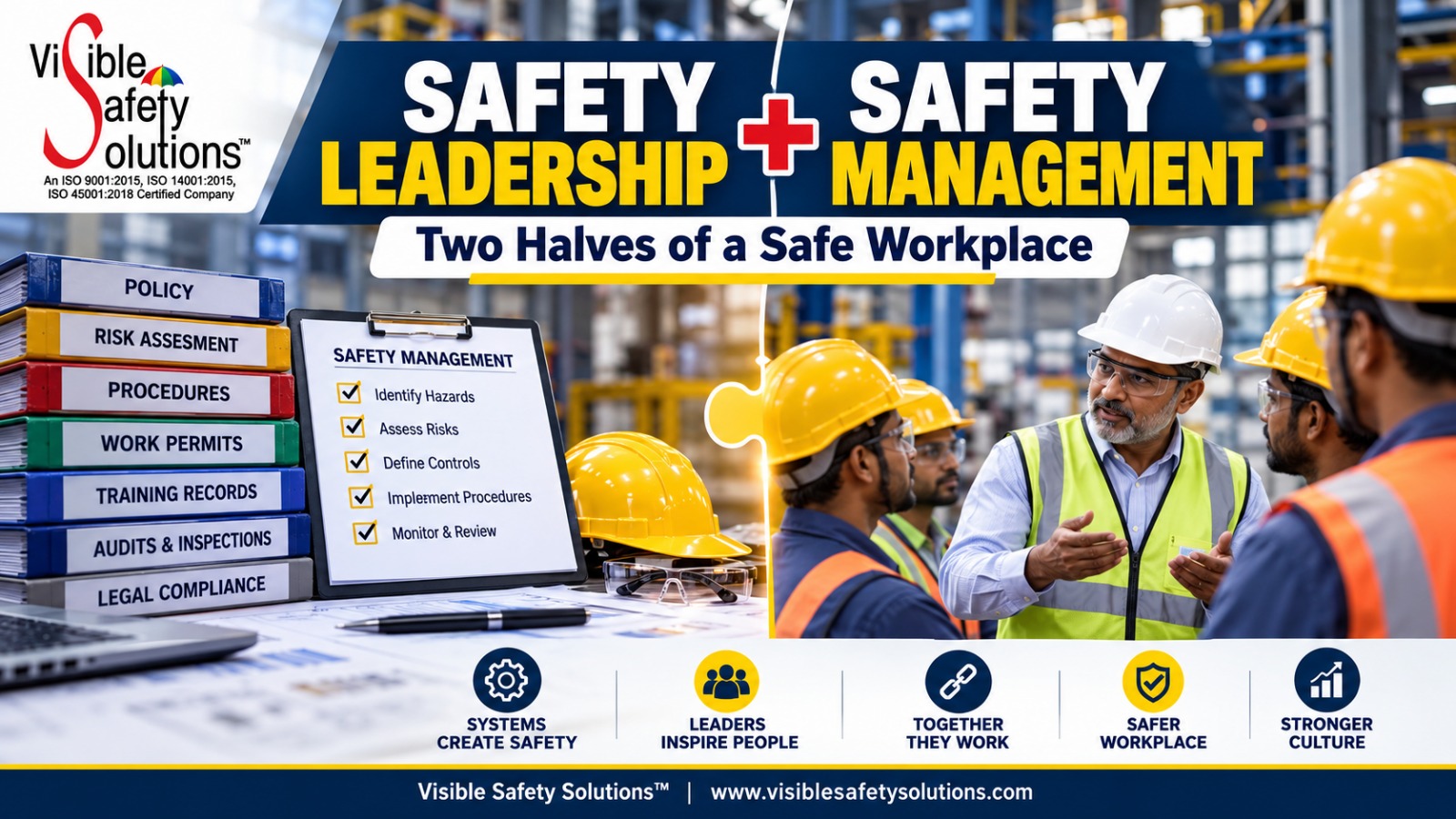
A safe workplace needs two things working together: a safety management system that tells people what to do, and safety leadership that makes them want to do it. Either one alone is not enough.
Many organisations invest heavily in procedures, permits and certifications, yet still have serious incidents. Others have passionate leaders who talk about safety constantly, but nothing changes on the shop floor. In both cases, one half of the equation is missing.
This article explains what each half does, why each fails without the other, and how to bring them together.
Two different jobs
Safety management is the structure: the policies, procedures and controls that make work safe by design. Safety leadership is the influence: the behaviour, values and example that make people follow that structure willingly.
|
|
Safety management |
Safety leadership |
|
Focus |
Systems and processes |
People and behaviour |
|
Main question |
What must be done, and how? |
Why does it matter, and will people do it? |
|
Tools |
Policy, HIRA, permits, SOPs, audits, training records |
Visible presence, communication, recognition, coaching, personal example |
|
Works on |
Hazards and risks |
Attitudes, trust and culture |
|
Measured by |
Compliance, audit scores, lagging and leading indicators |
Engagement, hazard reporting, how people act when no one is watching |
|
Typical owner |
Safety department and line management |
Every leader, from the owner to the front-line supervisor |
The two are not competitors. Management builds the road; leadership makes sure people actually drive on it.
Management without leadership: safety on paper
A site can hold ISO 45001 certification, have every SOP in the file and still be unsafe. We see this often during audits. The permit is signed, but nobody checked the isolation. The HIRA exists, but the crew doing the job has never read it. The toolbox talk register is full, but the talks were five-minute formalities.
The warning signs are familiar:
• Procedures are written for auditors, not for the people doing the work.
• Workers follow rules only when a supervisor is watching.
• Near misses go unreported because people fear blame or see no point.
• Production pressure quietly wins whenever it clashes with a procedure.
The system is there, but nobody believes in it. Without leadership, a management system becomes a documentation exercise.
Leadership without management: enthusiasm that fades
The opposite problem is just as real. A new plant head arrives, gives powerful speeches about zero harm, and walks the floor every morning. For a few months, people respond. Then the leader is transferred, or busy with a production crisis, and everything slides back.
This happens because good intentions were never turned into systems:
• Hazards are discussed, but never formally identified, assessed and controlled.
• Safe behaviour depends on one person's energy rather than on clear standards.
• There is no data to show whether things are actually improving.
• Contractors and new joiners never receive the message in a structured way.
Leadership creates commitment. Management makes that commitment last beyond any one individual.
How they complete each other
ISO 45001 shows the link clearly. Its structure follows the Plan-Do-Check-Act cycle, and it places leadership and worker participation at the centre of that cycle. The standard expects top management to take accountability for safety, not just delegate it to the safety officer.
At every stage, the system provides the method and leadership provides the push:
|
Stage |
What safety management provides |
What safety leadership adds |
|
Plan |
Safety policy, HIRA, legal register, objectives and targets |
Signs and owns the policy, sets ambitious goals, gives budget and people |
|
Do |
SOPs, work permits, training, PPE, contractor controls, emergency plans |
Explains the why, involves workers in planning, refuses to let production override safety |
|
Check |
Inspections, audits, incident investigation, leading and lagging indicators |
Walks the floor personally, asks questions, treats near-miss reports as valuable |
|
Act |
Corrective actions, management review, updated procedures |
Closes actions on time, recognises good performance, holds leaders accountable fairly |
When both are present, they reinforce each other. Leadership gives the system credibility, and the system gives leadership something concrete to drive.
Practical steps for owners and senior managers
1. Own the policy personally. Sign it, explain it in your own words at a town hall, and display it in the languages your workers speak.
2. Put safety first on the agenda. Start every management meeting with safety performance, not production figures.
3. Walk the floor regularly. Schedule safety walks with a fixed frequency. Ask workers what worries them and act on what you hear.
4. Follow every rule yourself. Wear the PPE, respect the permit, and stop work you see is unsafe.
5. Make the system usable. Write procedures with the people who do the job, in simple language, and remove paperwork that adds no safety value.
6. Reward reporting, not silence. Thank people for near-miss reports and unsafe-condition alerts. Investigate to find causes, not culprits.
7. Train your supervisors as leaders. Give them skills in communication, coaching and intervention, not only technical knowledge.
8. Track leading indicators. Measure inspections done, actions closed and observations raised, not only injuries after the fact.
9. Close the loop. Review performance at management review and visibly act on the findings.
Frequently asked questions
What is the difference between safety leadership and safety management? Safety management is the system of policies, procedures and controls that manage risk. Safety leadership is the behaviour and influence of leaders that make people believe in and follow that system.
Can a company be safe with just a good safety management system? Rarely. Without visible leadership commitment, systems turn into paperwork, and workers follow rules only when watched.
Does ISO 45001 require safety leadership? Yes. ISO 45001 has a dedicated clause on leadership and worker participation, and it expects top management to take overall accountability for health and safety.
Who is a safety leader in an organisation? Everyone who leads people: the owner, senior managers, engineers and especially front-line supervisors, who have the most daily influence on workers.
How can safety leadership be measured? Through leading indicators such as safety walks completed, near misses reported, corrective actions closed on time, and results of safety culture or perception surveys.
Bringing the two halves together
Safety management without leadership is a body without a heartbeat. Safety leadership without management is a heartbeat without a body. A safe workplace needs both: systems that make the safe way clear, and leaders who make the safe way the only acceptable way.
Start by asking two honest questions. Is our system something people actually use, or something we show auditors? And do our leaders live the rules, or only announce them?
Visible Safety Solutions™ (VSS™) is an ISO 9001, 14001 and 45001-certified EHS consultancy based in New Delhi, with 28+ years of experience. We help organisations build safety management systems, conduct safety audits and HIRA, and train leaders and supervisors to drive a strong safety culture. Visit www.visiblesafetysolutions.com to start the conversation.
सेफ्टी लीडरशिप और सेफ्टी मैनेजमेंट: सुरक्षित कार्यस्थल के दो पूरक स्तंभ
सुरक्षित कार्यस्थल के लिए दो चीज़ें साथ-साथ चाहिए: एक सेफ्टी मैनेजमेंट सिस्टम, जो बताता है कि क्या करना है, और सेफ्टी लीडरशिप, जो लोगों में उसे करने की इच्छा जगाती है। इनमें से कोई एक अकेले काफ़ी नहीं है।
कई संगठन प्रक्रियाओं, परमिट और प्रमाणपत्रों पर बहुत खर्च करते हैं, फिर भी गंभीर दुर्घटनाएँ होती रहती हैं। कुछ संगठनों में ऐसे जोशीले लीडर होते हैं जो हर समय सुरक्षा की बात करते हैं, लेकिन शॉप फ़्लोर पर कुछ नहीं बदलता। दोनों ही स्थितियों में समीकरण का एक हिस्सा गायब है।
इस लेख में हम समझेंगे कि दोनों की भूमिका क्या है, एक-दूसरे के बिना दोनों क्यों विफल होते हैं, और इन्हें साथ कैसे लाया जाए।
दो अलग-अलग काम
सेफ्टी मैनेजमेंट ढाँचा है: वे नीतियाँ, प्रक्रियाएँ और नियंत्रण जो काम को डिज़ाइन से ही सुरक्षित बनाते हैं। सेफ्टी लीडरशिप प्रभाव है: वह व्यवहार, मूल्य और उदाहरण जिससे लोग उस ढाँचे का पालन मन से करते हैं।
|
|
सेफ्टी मैनेजमेंट |
सेफ्टी लीडरशिप |
|
केंद्र |
सिस्टम और प्रक्रियाएँ |
लोग और व्यवहार |
|
मुख्य प्रश्न |
क्या करना है और कैसे? |
यह क्यों ज़रूरी है, और क्या लोग इसे करेंगे? |
|
साधन |
सेफ्टी पॉलिसी, HIRA, वर्क परमिट, SOP, ऑडिट, ट्रेनिंग रिकॉर्ड |
फ़्लोर पर उपस्थिति, संवाद, सराहना, मार्गदर्शन, स्वयं का उदाहरण |
|
किस पर काम करता है |
खतरे और जोखिम |
सोच, भरोसा और संस्कृति |
|
कैसे मापा जाता है |
अनुपालन, ऑडिट स्कोर, लीडिंग और लैगिंग इंडिकेटर |
भागीदारी, खतरों की रिपोर्टिंग, कोई न देख रहा हो तब भी लोगों का व्यवहार |
|
ज़िम्मेदारी |
सेफ्टी विभाग और लाइन मैनेजमेंट |
मालिक से लेकर फ़्रंट-लाइन सुपरवाइज़र तक हर लीडर |
ये दोनों प्रतिस्पर्धी नहीं हैं। मैनेजमेंट सड़क बनाता है; लीडरशिप यह सुनिश्चित करती है कि लोग सचमुच उसी सड़क पर चलें।
लीडरशिप के बिना मैनेजमेंट: कागज़ी सुरक्षा
कोई साइट ISO 45001 प्रमाणित हो सकती है, फ़ाइल में हर SOP मौजूद हो सकता है, फिर भी वह असुरक्षित हो सकती है। ऑडिट के दौरान हम यह अक्सर देखते हैं। परमिट पर हस्ताक्षर हैं, लेकिन आइसोलेशन किसी ने जाँचा नहीं। HIRA बना हुआ है, लेकिन काम करने वाली टीम ने उसे कभी पढ़ा ही नहीं। टूलबॉक्स टॉक का रजिस्टर भरा है, पर बातचीत पाँच मिनट की औपचारिकता थी।
चेतावनी के संकेत जाने-पहचाने हैं:
• प्रक्रियाएँ ऑडिटर के लिए लिखी जाती हैं, काम करने वालों के लिए नहीं।
• कर्मचारी नियमों का पालन तभी करते हैं जब सुपरवाइज़र देख रहा हो।
• नियर मिस रिपोर्ट नहीं होते, क्योंकि लोगों को दोष का डर होता है या उन्हें इसका कोई फ़ायदा नहीं दिखता।
• जब भी प्रक्रिया और उत्पादन में टकराव होता है, उत्पादन का दबाव चुपचाप जीत जाता है।
सिस्टम मौजूद है, पर उस पर किसी को भरोसा नहीं। लीडरशिप के बिना मैनेजमेंट सिस्टम केवल कागज़ी कार्रवाई बनकर रह जाता है।
मैनेजमेंट के बिना लीडरशिप: फीका पड़ता जोश
उल्टी समस्या भी उतनी ही वास्तविक है। एक नए प्लांट हेड आते हैं, "ज़ीरो हार्म" पर प्रभावशाली भाषण देते हैं और हर सुबह फ़्लोर पर घूमते हैं। कुछ महीनों तक लोग उत्साह दिखाते हैं। फिर उनका तबादला हो जाता है, या वे किसी उत्पादन संकट में व्यस्त हो जाते हैं, और सब कुछ पुराने ढर्रे पर लौट आता है।
ऐसा इसलिए होता है क्योंकि अच्छे इरादों को कभी सिस्टम में नहीं बदला गया:
• खतरों पर चर्चा होती है, लेकिन उनकी औपचारिक पहचान, आकलन और नियंत्रण नहीं होता।
• सुरक्षित व्यवहार स्पष्ट मानकों पर नहीं, बल्कि एक व्यक्ति की ऊर्जा पर टिका होता है।
• यह दिखाने के लिए कोई आँकड़े नहीं होते कि स्थिति सचमुच सुधर रही है या नहीं।
• ठेकेदारों और नए कर्मचारियों तक संदेश व्यवस्थित तरीके से पहुँचता ही नहीं।
लीडरशिप प्रतिबद्धता जगाती है। मैनेजमेंट उस प्रतिबद्धता को किसी एक व्यक्ति से आगे टिकाऊ बनाता है।
दोनों एक-दूसरे को कैसे पूरा करते हैं
ISO 45001 इस संबंध को साफ़ दिखाता है। इसकी संरचना Plan-Do-Check-Act (PDCA) चक्र पर आधारित है, और यह लीडरशिप तथा कर्मचारी भागीदारी को उस चक्र के केंद्र में रखता है। यह मानक अपेक्षा करता है कि शीर्ष प्रबंधन सुरक्षा की जवाबदेही स्वयं ले, न कि केवल सेफ्टी ऑफ़िसर पर छोड़ दे।
हर चरण पर सिस्टम तरीका देता है और लीडरशिप उसे आगे बढ़ाती है:
|
चरण |
सेफ्टी मैनेजमेंट क्या देता है |
सेफ्टी लीडरशिप क्या जोड़ती है |
|
Plan (योजना) |
सेफ्टी पॉलिसी, HIRA, लीगल रजिस्टर, उद्देश्य और लक्ष्य |
पॉलिसी पर हस्ताक्षर कर उसकी ज़िम्मेदारी लेती है, ऊँचे लक्ष्य तय करती है, बजट और लोग देती है |
|
Do (क्रियान्वयन) |
SOP, वर्क परमिट, ट्रेनिंग, PPE, ठेकेदार नियंत्रण, आपातकालीन योजना |
"क्यों" समझाती है, योजना में कर्मचारियों को शामिल करती है, उत्पादन को सुरक्षा पर हावी नहीं होने देती |
|
Check (जाँच) |
निरीक्षण, ऑडिट, दुर्घटना जाँच, लीडिंग और लैगिंग इंडिकेटर |
स्वयं फ़्लोर पर जाती है, सवाल पूछती है, नियर मिस रिपोर्ट को मूल्यवान मानती है |
|
Act (सुधार) |
सुधारात्मक कार्रवाई, मैनेजमेंट रिव्यू, अद्यतन प्रक्रियाएँ |
कार्रवाइयाँ समय पर पूरी कराती है, अच्छे प्रदर्शन को सराहती है, लीडरों को निष्पक्ष रूप से जवाबदेह ठहराती है |
जब दोनों मौजूद हों, तो वे एक-दूसरे को मज़बूत करते हैं। लीडरशिप सिस्टम को विश्वसनीयता देती है, और सिस्टम लीडरशिप को आगे बढ़ाने के लिए ठोस आधार देता है।
मालिकों और वरिष्ठ प्रबंधकों के लिए व्यावहारिक कदम
1. पॉलिसी की ज़िम्मेदारी स्वयं लें। उस पर हस्ताक्षर करें, टाउन हॉल में अपने शब्दों में समझाएँ, और उसे कर्मचारियों की भाषा में प्रदर्शित करें।
2. सुरक्षा को एजेंडे में सबसे ऊपर रखें। हर मैनेजमेंट मीटिंग की शुरुआत उत्पादन के आँकड़ों से नहीं, सेफ्टी परफ़ॉर्मेंस से करें।
3. नियमित रूप से फ़्लोर पर जाएँ। सेफ्टी वॉक तय अंतराल पर करें। कर्मचारियों से पूछें कि उन्हें किस बात की चिंता है, और जो सुनें उस पर कार्रवाई करें।
4. हर नियम का पालन स्वयं करें। PPE पहनें, परमिट का सम्मान करें, और असुरक्षित काम दिखे तो उसे रोकें।
5. सिस्टम को उपयोगी बनाएँ। प्रक्रियाएँ काम करने वालों के साथ मिलकर सरल भाषा में लिखें, और वह कागज़ी कार्रवाई हटाएँ जो सुरक्षा में कुछ नहीं जोड़ती।
6. चुप्पी को नहीं, रिपोर्टिंग को पुरस्कृत करें। नियर मिस और असुरक्षित स्थिति की सूचना देने वालों का धन्यवाद करें। जाँच का उद्देश्य कारण ढूँढना हो, दोषी नहीं।
7. सुपरवाइज़रों को लीडर के रूप में प्रशिक्षित करें। उन्हें केवल तकनीकी ज्ञान नहीं, बल्कि संवाद, मार्गदर्शन और हस्तक्षेप के कौशल भी दें।
8. लीडिंग इंडिकेटर ट्रैक करें। केवल दुर्घटनाओं के बाद के आँकड़े नहीं, बल्कि किए गए निरीक्षण, पूरी हुई कार्रवाइयाँ और दर्ज ऑब्ज़र्वेशन भी मापें।
9. चक्र पूरा करें। मैनेजमेंट रिव्यू में प्रदर्शन की समीक्षा करें और निष्कर्षों पर स्पष्ट रूप से कार्रवाई करें।
अक्सर पूछे जाने वाले प्रश्न
सेफ्टी लीडरशिप और सेफ्टी मैनेजमेंट में क्या अंतर है? सेफ्टी मैनेजमेंट नीतियों, प्रक्रियाओं और नियंत्रणों की वह व्यवस्था है जो जोखिम को संभालती है। सेफ्टी लीडरशिप लीडरों का वह व्यवहार और प्रभाव है जिससे लोग उस व्यवस्था पर भरोसा करते हैं और उसका पालन करते हैं।
क्या केवल अच्छे सेफ्टी मैनेजमेंट सिस्टम से कंपनी सुरक्षित रह सकती है? बहुत कम। शीर्ष प्रबंधन की स्पष्ट प्रतिबद्धता के बिना सिस्टम कागज़ी बन जाते हैं, और कर्मचारी नियमों का पालन तभी करते हैं जब कोई देख रहा हो।
क्या ISO 45001 में सेफ्टी लीडरशिप अनिवार्य है? हाँ। ISO 45001 में लीडरशिप और कर्मचारी भागीदारी पर एक अलग क्लॉज़ है, और यह शीर्ष प्रबंधन से स्वास्थ्य एवं सुरक्षा की समग्र जवाबदेही की अपेक्षा करता है।
संगठन में सेफ्टी लीडर कौन होता है? हर वह व्यक्ति जो लोगों का नेतृत्व करता है: मालिक, वरिष्ठ प्रबंधक, इंजीनियर और ख़ासकर फ़्रंट-लाइन सुपरवाइज़र, जिनका कर्मचारियों पर रोज़ सबसे अधिक प्रभाव होता है।
सेफ्टी लीडरशिप को कैसे मापा जा सकता है? लीडिंग इंडिकेटर से, जैसे पूरी हुई सेफ्टी वॉक, रिपोर्ट किए गए नियर मिस, समय पर बंद हुई सुधारात्मक कार्रवाइयाँ, और सेफ्टी कल्चर या पर्सेप्शन सर्वे के परिणाम।
दोनों हिस्सों को साथ लाना
लीडरशिप के बिना सेफ्टी मैनेजमेंट ऐसा शरीर है जिसमें धड़कन नहीं। मैनेजमेंट के बिना सेफ्टी लीडरशिप ऐसी धड़कन है जिसका कोई शरीर नहीं। सुरक्षित कार्यस्थल के लिए दोनों चाहिए: ऐसे सिस्टम जो सुरक्षित तरीका स्पष्ट करें, और ऐसे लीडर जो सुरक्षित तरीके को ही एकमात्र स्वीकार्य तरीका बना दें।
शुरुआत दो ईमानदार सवालों से करें। क्या हमारा सिस्टम सचमुच लोग इस्तेमाल करते हैं, या यह केवल ऑडिटर को दिखाने के लिए है? और क्या हमारे लीडर नियमों को जीते हैं, या केवल उनकी घोषणा करते हैं?
विज़िबल सेफ्टी सॉल्यूशंस™ (VSS™) नई दिल्ली स्थित ISO 9001, 14001 और 45001 प्रमाणित EHS कंसल्टेंसी है, जिसके पास 28+ वर्षों का अनुभव है। हम संगठनों को सेफ्टी मैनेजमेंट सिस्टम बनाने, सेफ्टी ऑडिट और HIRA करने, तथा मज़बूत सेफ्टी कल्चर के लिए लीडरों और सुपरवाइज़रों को प्रशिक्षित करने में मदद करते हैं। बातचीत शुरू करने के लिए www.visiblesafetysolutions.com पर जाएँ।